Price of haphazard and uncontrolled tourism development
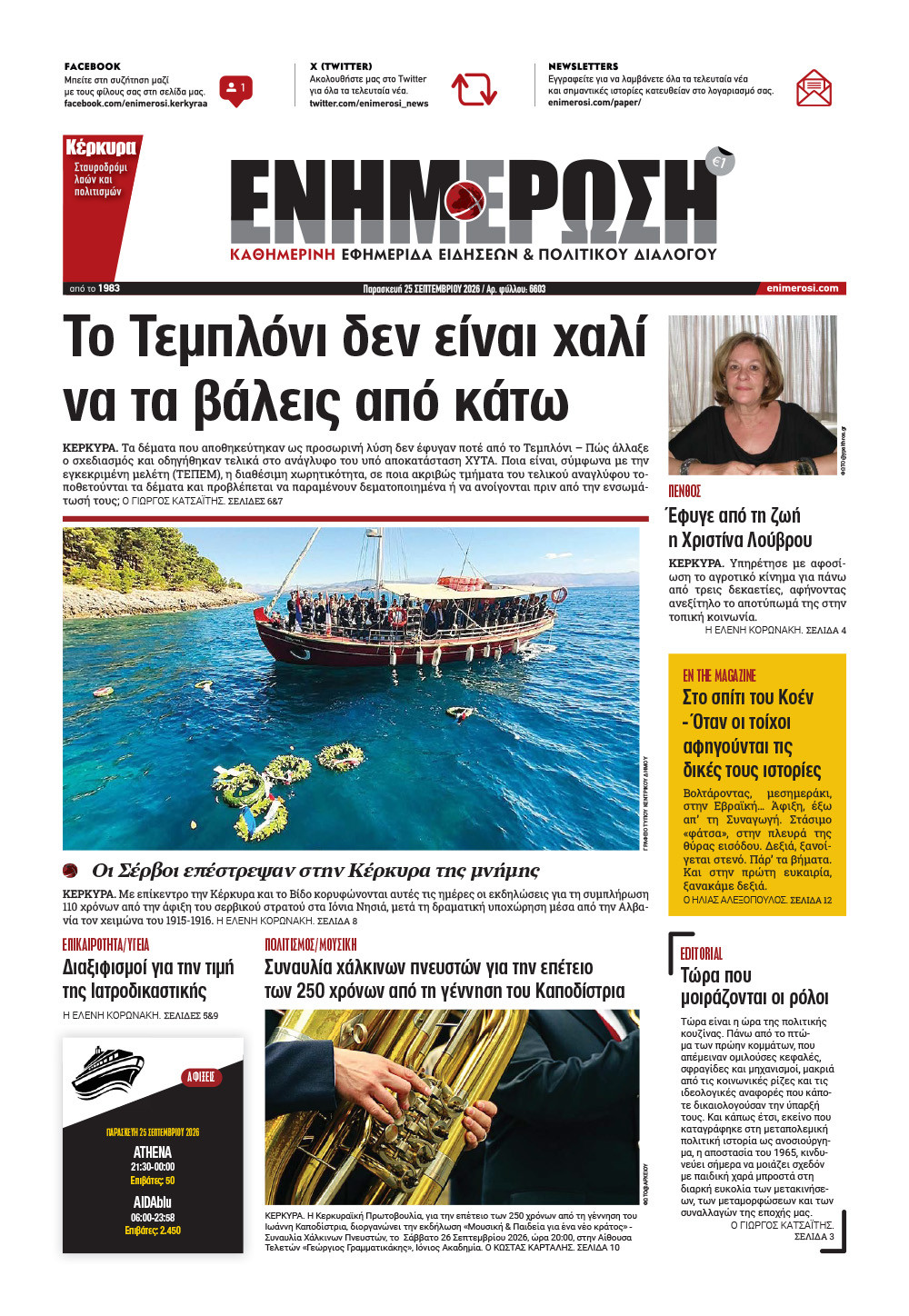
 New beds are being continuously added without an updated, unified study of carrying capacity. This alone constitutes a very significant matter of public interest and is directly linked to the problems of water supply, sewage, traffic, and housing that are already being recorded in Corfu. Photo: Pixabay
CORFU. Corfu tracks arrivals, but does not publicly measure the strain each year places on the island.
The discussion about tourism development in Corfu can be ideological, political, or emotional. But it can also be accounting. If the data cited by the Corfu Hoteliers Association from INSETE are fully confirmed, then in short-term rentals alone approximately 13,086 new beds were added in Corfu between 2020 and 2023, as capacity increased from 51,567 to 64,653 beds. The same Association stated in 2025 that short-term rental accommodations now exceed 16,000 and beds exceed 70,000, with an increase of more than 70% within five years. In other words, Corfu is not losing tourism capacity. It is increasing it.
The cost starts with water. If we take 20,000 new tourist beds as a baseline, then at peak demand they require 3,260 to 4,800 cubic metres of water per day, depending on consumption. The lower estimate is based on 163 litres per visitor per day, corresponding to the average tourist consumption reported for Barcelona, while in luxury hotels consumption exceeds 240 litres per day (AP News). Thus, 20,000 new beds roughly mean an additional daily water demand equivalent to a small city. And this does not include swimming pools, network losses, or increased consumption during heatwaves.
In sewage systems, the same number translates into 20,000 additional equivalent residents at peak times. In other words, new tourism capacity is not just “beds”. It is wastewater, networks, pumping stations, and treatment facilities. If the capacity of infrastructure has not increased accordingly, the shortfall is transferred to the environment and public health.
In waste management, using a conservative estimate of 1.4 kilograms per person per day—roughly corresponding to the 519 kilograms per capita per year attributed to Greece in the Global Waste Index—the 20,000 new beds produce an additional 28 tonnes of waste per peak day (Investopedia). If we account for higher tourist consumption than household averages, the figure rises. For comparison, in tourist island destinations such as Hawaii, around 3.3 kilograms of waste per visitor per day is reported (Wikipedia). Using this factor, 20,000 beds would generate up to 66 tonnes of waste per day at peak times.
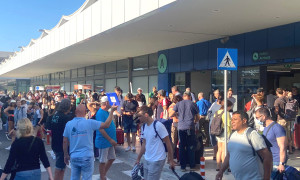
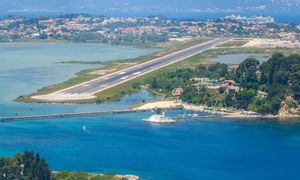
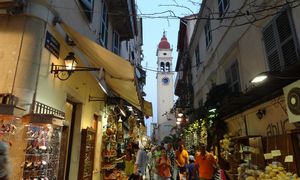
On the roads, the calculation is more complex but not invisible. If the 20,000 beds operate at peak occupancy and every two to three visitors correspond to one vehicle movement—rental cars, taxis, buses, excursion transport, or private vehicles—then the road network is subjected to thousands of additional daily trips. Not every visitor needs a car for the system to be strained. It is enough that the chain—airport, port, accommodation, beaches, Old Town, excursions, supply deliveries, and waste collection—operates on roads not designed for this peak load.
This is how the real balance sheet of development emerges. The 20,000 new beds are not only 20,000 overnight stays. They represent up to 4,800 cubic metres of water per day, 20,000 equivalent residents in wastewater terms, 28 to 66 tonnes of daily waste, and thousands of additional trips. The question for Corfu is not whether the market can add beds. Clearly it can. The question is whether the public sector is adding water supply, sewage systems, waste management, roads, parking, and housing for tourism workers at the same pace.
Until such a balance sheet is presented by the municipality, the region, the water utility (DEYAK), the waste management authority, and the legally established destination management organisation, Corfu will continue to discuss development in terms of impressions. But the bill exists. And it grows every year.
GIORGOS KATSAITIS