Future of treatment plant uncertain amid changes to national waste management strategy
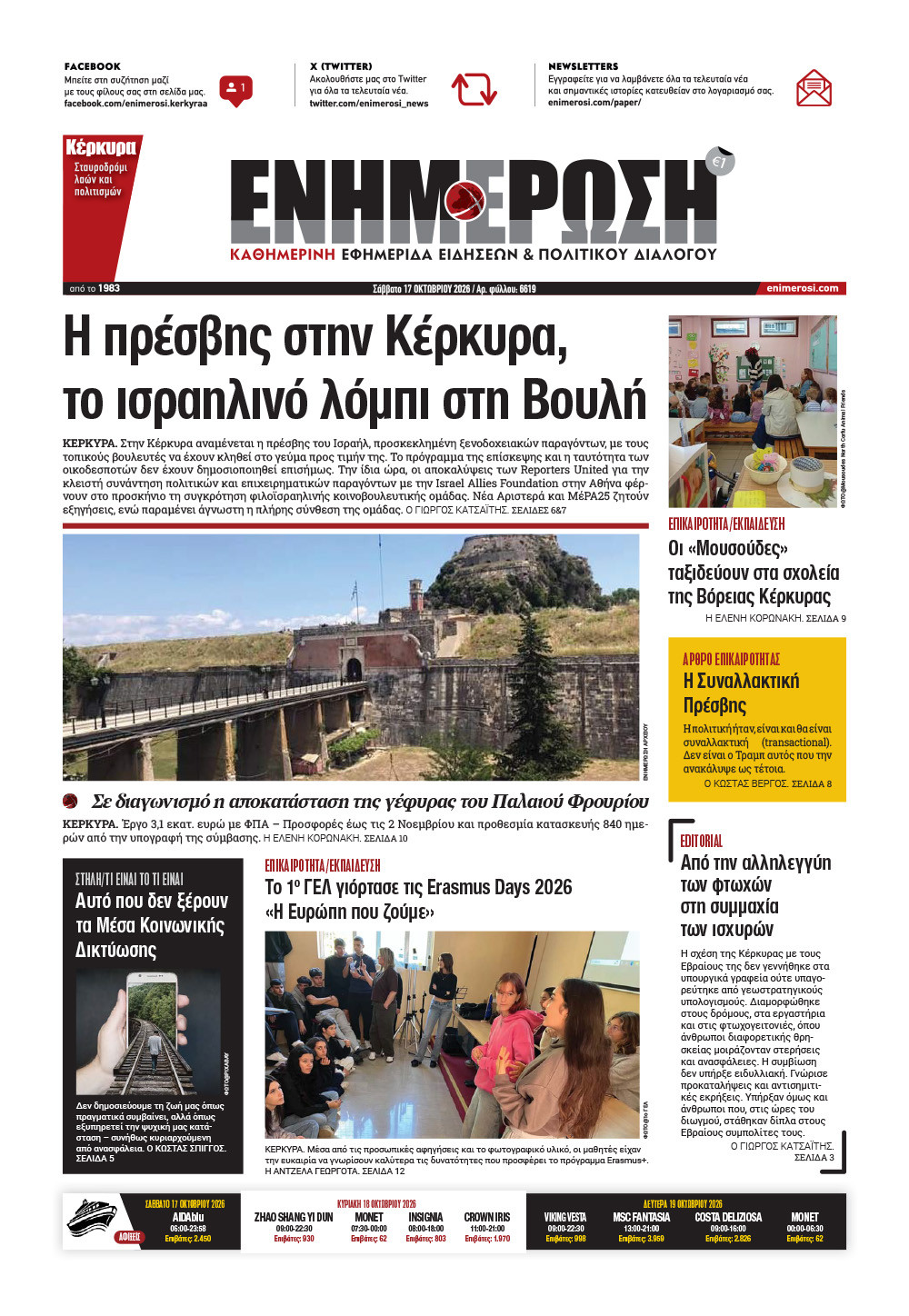
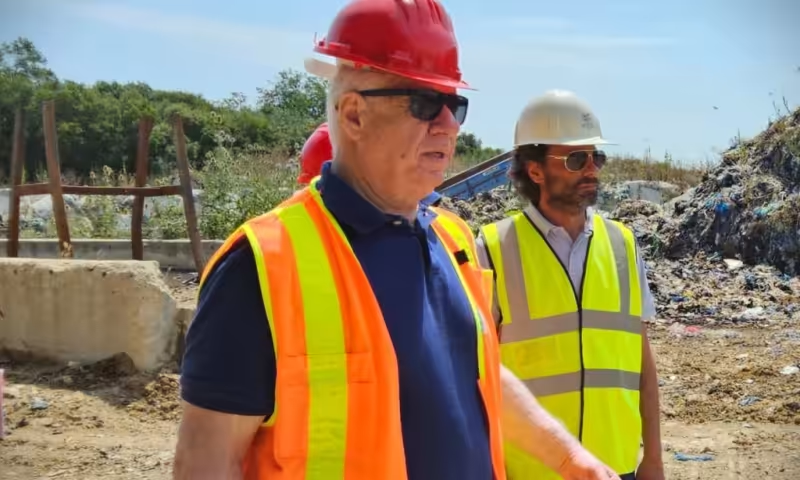 Regional Governor Yiannis Trepeklis at Temploni/Enimerosi archive
CORFU. The project in Temploni has been contracted, but construction has not yet begun, as funding, technical planning, and the residual waste management model are being changed across the country.
Despite the signing of the contract for the waste treatment plant in Temploni at the end of 2025, the project remains essentially without an active construction front. This is now attributed not only to outstanding funding issues but also to the ongoing changes in the national waste management planning framework. The facility, which was initially presented as a conventional waste treatment plant, is now being reclassified under the new category of Recovery and Recycling Units, as part of a revision of the national strategy that shifts the focus from simple mixed-waste processing toward material recovery, the production of secondary fuel, and the energy utilisation of residual waste.
In practice, Corfu finds itself trapped in a transitional period in which technical specifications, environmental targets, and funding instruments are all changing simultaneously. The project was originally designed under the OP “Environment and Climate Change” and the previous programming period, but the inability to begin substantial construction work in time now appears to be shifting it into the new ESPA 2021–2027 funding framework, possibly as a phased (“phasing”) project or through new inclusion. This explains why, despite the contract being signed, a full construction site has not yet been established.
At the same time, in the waste management sector, the final destination of the residual waste produced by such facilities is considered a critical issue. The new national direction increasingly promotes the energy recovery of RDF/SRF, meaning refuse-derived fuel produced after the mechanical processing of mixed waste. Within this context, there is growing discussion about the possibility of creating an energy recovery plant in Epirus, with references to Dodoni, which fuels scenarios about linking Corfu to a broader regional waste management plan in western Greece.
Officially, no operational dependency of the Corfu plant on any other project in Epirus has been confirmed. However, market stakeholders consider that the economic and operational viability of such facilities is now directly linked to the existence of a network for energy recovery of residual waste. Given that Corfu continues to record low recycling rates and limited separation at source, the future plant is expected to generate significant quantities of residual waste that will need to be transported off the island.
Thus, the Temploni facility today appears dependent not only on funding but also on a constantly evolving national planning framework that affects technical characteristics, timelines, environmental obligations, and ultimately the very operational model of the plant intended to manage Corfu’s waste.
GIORGOS KATSAITIS