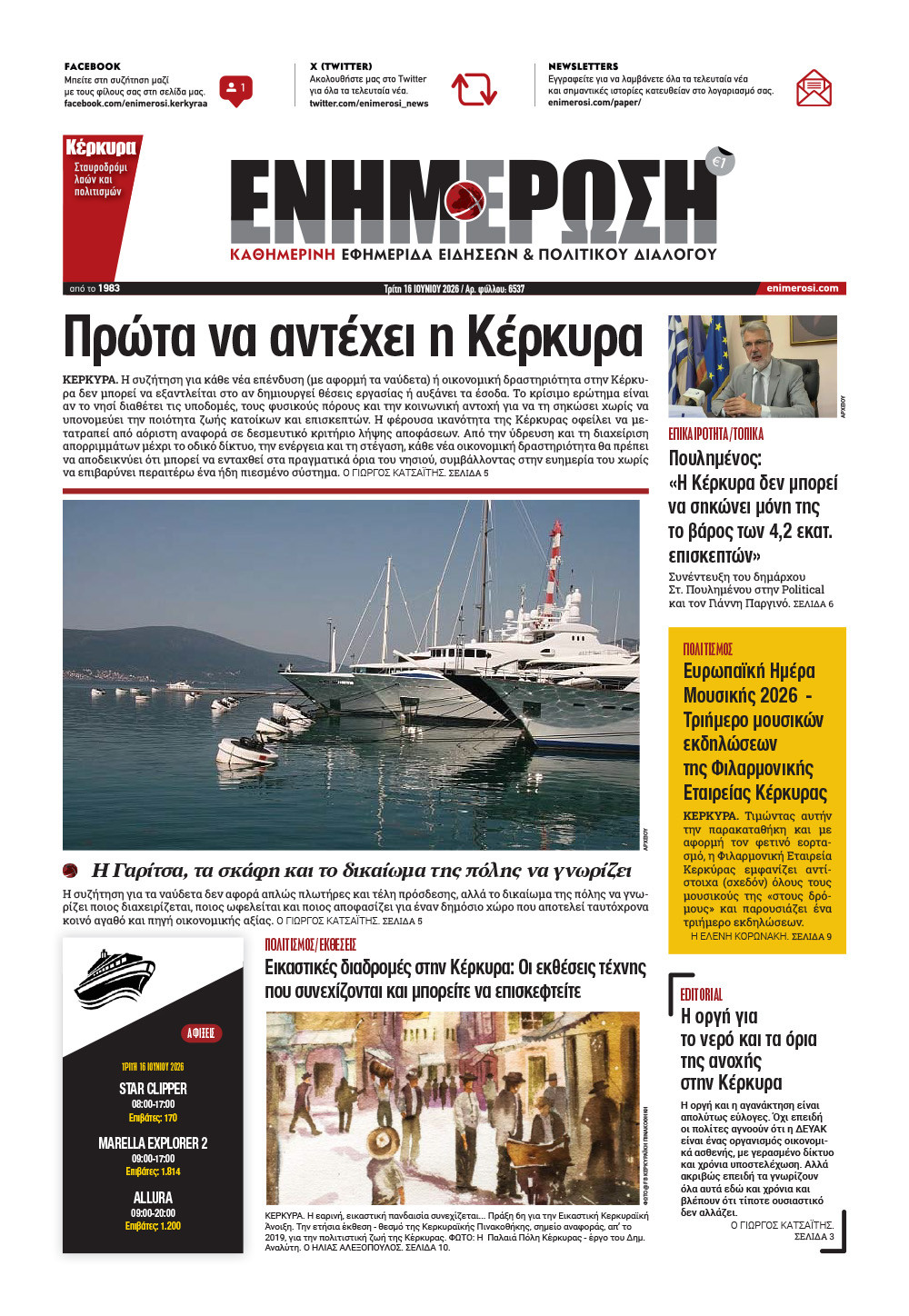
Outrage over water and limits of public tolerance in Corfu

Residents of Corfu are aware that DEYAK is an aging and financially strained utility. So why does outrage erupt after every extended water outage? Because understanding the causes does not diminish the demand for what is self-evident: access to a basic public service.
Anger and indignation are entirely reasonable. Not because the public are unaware that DEYAK is a financially weak organisation, with an aging network and chronic understaffing. But precisely because they have known all this for years and see that nothing substantial changes.
The paradox is only apparent. On the one hand, almost everyone agrees on the diagnosis: an organisation that inherited decades of neglect, with infrastructure dating back many decades, limited investment capacity, debts, and an inability to meet the increased needs of an island whose population multiplies in the summer. On the other hand, the same citizens demand—and rightly so—that when they turn on the tap, water should flow.
Because water is not a luxury. It is the most basic public service. The public do not deal with the history of omissions, but with the outcome. One cannot explain to an elderly person, a worker, a hospitality professional, or a mother with young children that the problem is “long-standing.” They live in the present: without water, without the ability to plan, often without timely and reliable information.
Perhaps, then, the reactions are not directed exclusively at the people working in the field crews. The images of workers trying for hours to repair leaks in a pipeline that ultimately turned out to have three separate points of failure evoke more sympathy than anger.
The real frustration appears to concern something deeper: the sense that Corfu has become accustomed to managing permanent emergency conditions. That each new breakdown is treated as just another episode in a familiar story, with no end in sight. That the “aging and bankrupt DEYAK” functions simultaneously as an explanation and as an excuse.
And here lies the political question: if everyone acknowledges that the organisation is weak, who had the responsibility to strengthen it before it reached the point of collapse? Who designed, who delayed, who postponed investments, and who chose to proceed with temporary solutions?
Social anger does not arise from ignorance of reality. It arises when that reality becomes entrenched as normality.
GIORGOS KATSAITIS